
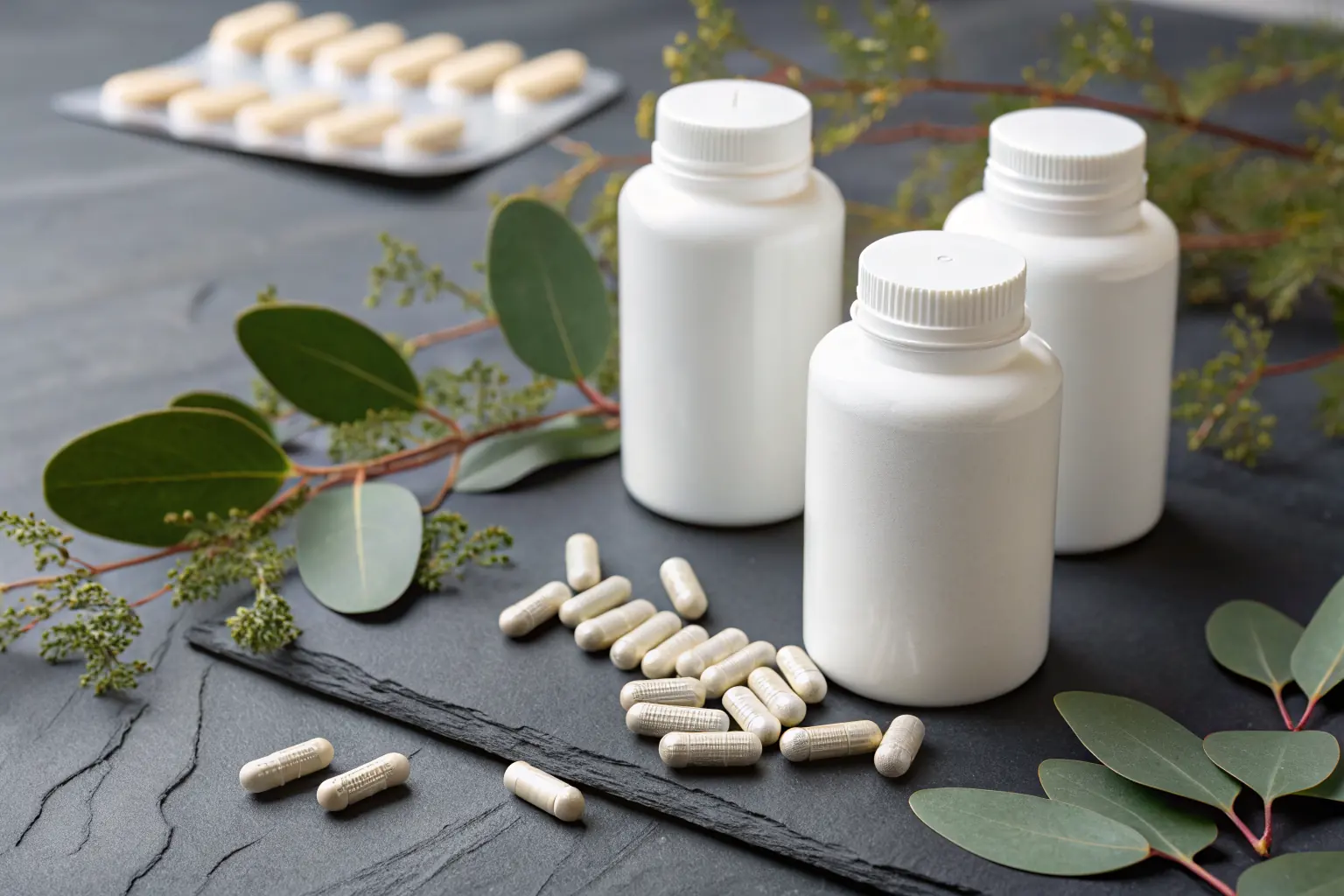
Every bottle of vitamins, protein powder, or dietary supplements sold in a plastic packer bottle leaves a debt. Not a financial one — a material one. The conventional PET or HDPE round packer bottle will persist in a landfill, a waterway, or on a coastline for up to 450 years after the last capsule is taken. Multiply that by 50 billion bottles shipped globally each year, and the picture becomes clear: nutraceutical packaging is one of the most significant and overlooked contributors to long-term plastic pollution. PHA biodegradable packer bottles change that equation completely.
Polyhydroxyalkanoates — PHA — are biopolymers produced by bacteria fermenting plant-based oils. Molded into the standard 150cc round packer profile with a 38-400 neck finish, they produce a bottle that matches conventional PET in structural rigidity, moisture resistance, and closure compatibility — while biodegrading completely in marine, soil, home compost, and industrial composting environments. Same performance. Zero petroleum. Zero microplastics at end of life.
50 Billion Plastic Supplement Bottles. Fewer Than 15% Ever Recycled.
The global nutraceuticals and supplements market ships over 50 billion plastic packer bottles annually. Made primarily from PET (polyethylene terephthalate) and HDPE (high-density polyethylene), these bottles are classified as recyclable in theory — but the reality is far messier. Residual powder, moisture-control packets, and supplement dust contaminate the interior, disqualifying most from standard curbside recycling programs. Fewer than 15% of nutraceutical bottles ever enter a recycling stream.
The remaining 85%+ accumulate in landfills, where they persist for 400–450 years. When they make it into waterways — through storm drain overflow, coastal disposal, or improper waste handling — they fragment under UV radiation into microplastic particles that infiltrate marine food chains, contaminate sediment, and have been detected in fish, shellfish, and drinking water globally. The supplements inside these bottles are often taken to support human health. The bottles they come in quietly undermine it.
The structural challenge is that no recycling innovation solves the contamination problem at scale. Supplement residue makes packer bottles a perpetual exception to curbside programs. The only path to closing the loop on 50 billion bottles per year is replacing the material — and PHA delivers a drop-in replacement that eliminates the environmental debt entirely.
50B+ bottles annually
The global supplements and nutraceuticals market ships over 50 billion plastic packer bottles each year across vitamins, protein, herbal, and sports nutrition categories.
450 years to degrade
Conventional PET packer bottles persist in marine and landfill environments for up to 450 years, photodegrading into microplastic particles that contaminate soil and waterways.
Under 15% recycled
Supplement residue and moisture-control packet contamination disqualify most packer bottles from curbside programs — fewer than 15% ever reach a legitimate recycling stream.
What Makes PHA Different from PET and HDPE Supplement Packaging
PET and HDPE are petroleum-derived polymers — their molecular structure is stable under ambient environmental conditions, which is exactly why they persist for centuries. When PET photodegrades in a marine environment, it does not disappear. It fragments into microplastic particles 5mm and smaller, which are then ingested by marine organisms, travel up food chains, and have been detected in human blood, lung tissue, and placentas.
PHA is structurally different at the molecular level. It is a polyester produced by bacteria as a cellular energy reserve — its chemical bonds are ones that naturally occurring environmental microorganisms recognize and can metabolize. In any environment where organic matter decomposes — marine water, soil, backyard compost, industrial composting facility — microorganisms break PHA down at the polymer level, producing water and CO₂ and leaving zero synthetic residue. No microplastics. No toxic fragments. The bottle disappears the way organic matter disappears.
For supplement brands, this distinction is material and documentable. PHA packer bottles carry TÜV Austria certifications across marine biodegradability, soil biodegradability, home compostability, industrial compostability, water biodegradability, and bio-based content — six independent third-party verifications that no petroleum-based packaging can match. The sustainability claim is not self-reported; it is tested and certified.
Six Advantages of PHA Packer Bottles for Supplement Brands
For nutraceutical brands, contract manufacturers, and packaging procurement teams weighing the switch to sustainable supplement packaging, PHA delivers across every dimension that matters to real-world operations.
- 01
Drop-In Replacement — No Equipment Changes Required
Pure Form Solution's PHA packer bottles are manufactured to match the standard 150cc round packer profile exactly: 104.30mm height, 50.34mm diameter, 38-400 neck finish, and opaque white finish. They are compatible with plastic continuous thread caps, child-resistant closures, and metal closures. No modifications to filling equipment, capping lines, or labeling equipment are required. The switch is operationally invisible to your production floor.
- 02
BPA-Free, Petroleum-Free, and Pharmaceutical-Grade Safe
PHA is produced through biological fermentation — no petroleum feedstocks, no BPA, no phthalates, no synthetic chemical precursors. The resulting material meets pharmaceutical-grade food contact standards for nutraceutical packaging, delivering the same safety profile as PET while eliminating the chemical concerns associated with petroleum-derived plastics. What goes into your product stays in your product, not in the bottle.
- 03
Certified Biodegradability Across All Environments
TÜV Austria certifications cover marine biodegradability, soil biodegradability, home composting, industrial composting, water biodegradability, and bio-based content — six independent third-party verifications. This means PHA packer bottles biodegrade completely regardless of how they are disposed of: in a landfill, in a waterway, in a backyard compost bin, or in a municipal composting program. No certification requires the consumer to manage disposal correctly for the environmental benefit to occur.
- 04
Zero Microplastics at End of Life
When PHA is metabolized by environmental microorganisms, the outputs are water and CO₂. No polymer fragments. No microplastic accumulation in sediment, waterways, or food chains. For brands marketing supplements to health-conscious consumers, eliminating microplastic output from your packaging is both an ethical and marketing distinction — one backed by third-party certification, not internal claims.
- 05
Moisture Resistance for Sensitive Nutraceutical Products
PHA delivers the moisture barrier performance that supplement packaging requires. Capsules, tablets, softgels, and powders are sensitive to moisture uptake during storage and shipping. PHA's bioplastic structure provides the same moisture resistance as conventional PET, maintaining product integrity throughout the distribution chain without requiring additional liner systems or secondary packaging.
- 06
Regulatory and ESG Positioning Ahead of Mandates
Single-use plastics regulation targeting pharmaceutical and nutraceutical packaging continues to advance across the EU and in multiple U.S. states. Brands switching to PHA now position themselves ahead of compliance mandates while building authentic, third-party-verified sustainability narratives for ESG reporting, retail buyer requirements, and direct-to-consumer marketing. The regulatory trajectory makes PET a legacy material — PHA positions your brand on the right side of where packaging standards are heading.
PHA vs. PET Packer Bottles: A Direct Comparison
The supplement industry has operated on PET and HDPE packer bottles for decades because no alternative matched them in dimensional precision, moisture resistance, and closure compatibility. PHA is the first bioplastic to meet all three criteria while delivering a fundamentally different end-of-life outcome.
Conventional PET Packer Bottle
Strength
Proven moisture resistance, exact dimensional compatibility with filling and capping equipment, low unit cost at scale, pharmaceutical-grade safety, broad closure compatibility
Limitation
400–450 years to degrade in landfill or ocean. Generates microplastics and nanoplastics. Petroleum-derived. Disqualified from most recycling programs due to supplement contamination. Increasingly regulated.
Best For
Operations where environmental end-of-life impact is not a consideration or reporting requirement
PHA Biodegradable Packer Bottle
Strength
Identical moisture resistance, rigidity, and closure compatibility to PET. BPA-free, petroleum-free, pharmaceutical-grade safe. Certified marine, soil, home compostable, and industrial compostable. Zero microplastics. Opaque white finish. Drop-in replacement in standard 150cc format.
Limitation
Higher unit cost vs. conventional PET — offset by ESG reporting value, regulatory future-proofing, and growing consumer premium for verified sustainable packaging
Best For
Supplement and nutraceutical brands committed to eliminating plastic waste from their packaging without compromising product safety, moisture performance, or manufacturing efficiency
The Certifications Behind the Claims
Sustainability language in packaging has a credibility problem. Products labeled 'eco-friendly,' 'compostable,' or 'plant-based' frequently rely on self-reported claims or certifications that apply only under industrial facility conditions unavailable to the consumer. PHA packer bottles from Pure Form Solution carry TÜV Austria certifications across six independent biodegradability and bio-based content categories — the most rigorous and widely recognized third-party verification framework available.
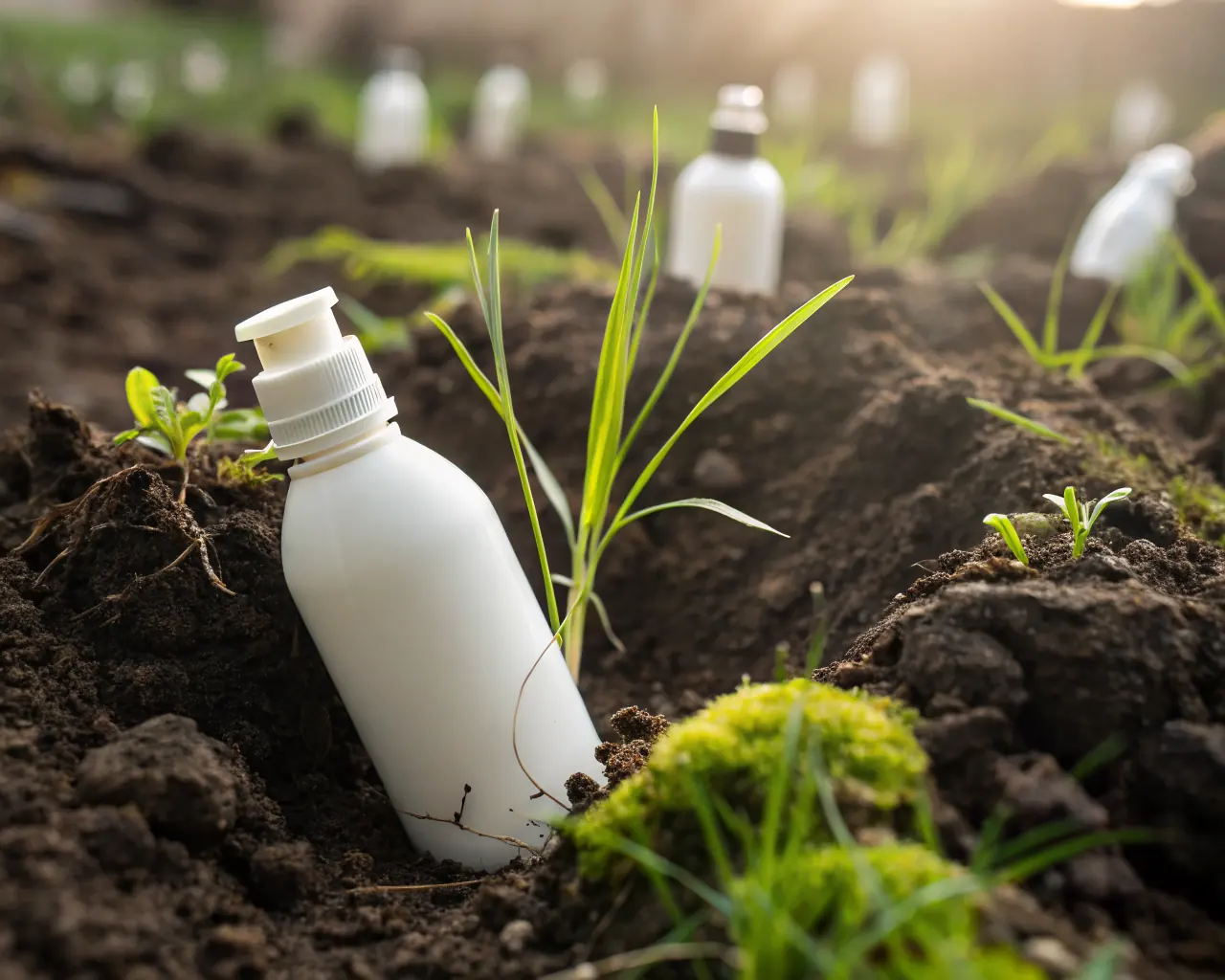
Marine biodegradability certification verifies that PHA is metabolized by microorganisms in seawater at realistic ocean temperatures without producing microplastic residue or toxic chemical byproducts. Soil biodegradability certification verifies terrestrial breakdown without specialized infrastructure. Home compostability certification verifies performance in ambient-temperature backyard composters. These are not self-certified standards — they are documented third-party laboratory results.
For supplement brands with ESG reporting obligations, retail buyer sustainability requirements, or direct-to-consumer marketing programs built on health and environmental positioning, PHA's TÜV Austria certification documentation provides the independent verification your claims require. No petroleum-based packaging alternative can qualify for these certifications regardless of formulation or recycled-content percentage.
"The supplement industry creates 50 billion plastic bottles of environmental liability every year. PHA closes that loop — same bottle, same performance, same production workflow, with the only difference being that the bottle actually disappears after use. That's not a compromise. That's the replacement the industry has been waiting for."
— Jim McGinnis, V.P. of Marketing & Sales, Pure Form Solution LLC
Pure Form Solution's PHA Packer Bottle Program
Pure Form Solution's PHA Biodegradable Packer Bottles are available in wholesale volumes for supplement brands, contract manufacturers, private-label nutraceutical operations, and co-packers. The standard 150cc round packer format covers the most common supplement bottle size in the market. Sample units are available for teams evaluating the switch before committing to volume orders.
Our Packaging Transition Program pairs each client with a specialist who evaluates your current product line, confirms dimensional and closure compatibility with your existing filling and capping equipment, and provides the TÜV Austria certification documentation your ESG, marketing, and retail buyer teams need. For brands with multiple SKUs across different bottle formats, we coordinate staged transitions that maintain operational continuity.
The switch from PET to PHA requires zero changes to your production floor. What changes is the environmental outcome of every bottle your brand ships: instead of 450 years in a landfill or ocean, each PHA packer bottle returns completely to nature within months of disposal. At 50 billion bottles per year globally, the industry's aggregate impact is enormous. Your brand's portion of that is a choice.
50 Billion Reasons to Make the Switch
The plastic packer bottle has been the default supplement packaging format for decades because it performs well and costs little. Those two facts remain true of PHA — the performance is identical, and the cost premium reflects a fundamentally different environmental outcome rather than a different product. For brands that have built their marketing on human health, the connection between the product inside the bottle and the material of the bottle itself is increasingly visible to the consumers buying both.
PHA packer bottles are not a future technology or a laboratory concept. They are available today, in the standard 150cc round packer format, certified across six independent biodegradability categories, and ready to drop into existing filling and capping lines with zero operational changes required.
Fifty billion bottles per year. Each one now a choice.
Explore Pure Form Solution Products