
The Best Alternatives to Conventional Petroleum-Based Plastic Packaging
By Pure Form Solution · Published
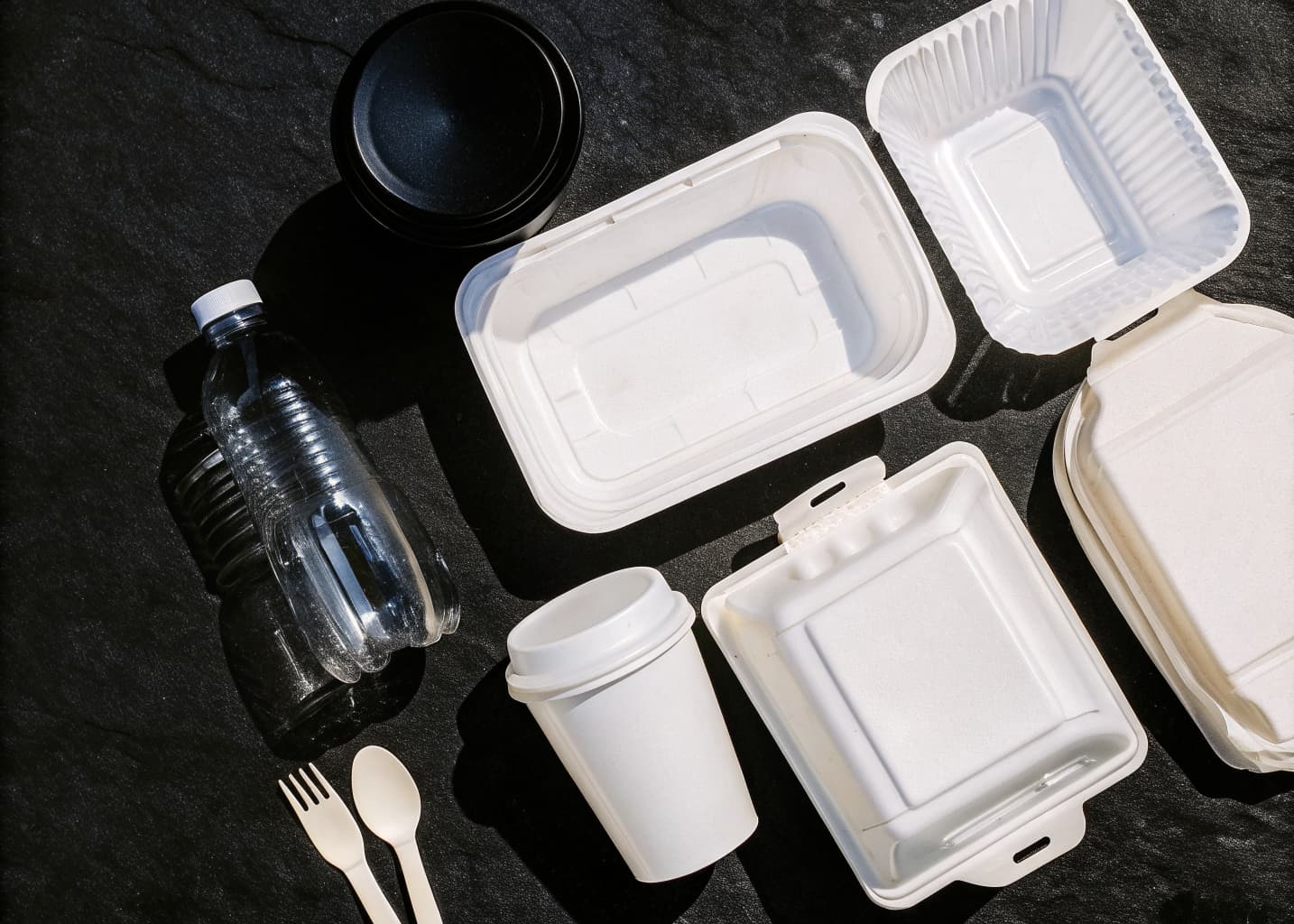
Why businesses are looking beyond petroleum-based plastic
Conventional plastic packaging is made from petroleum and is usually designed to last far longer than the few minutes or days it is actually used. Customers, regulators and large buyers are asking suppliers to reduce single-use plastic and to document what replaces it.
There is no single best alternative. The right choice depends on what the package holds, how long it must protect it, how it is disposed of and what it costs to switch. This article compares the main options so that purchasing teams can match material to application.
Paper and fiber-based packaging
Paper, paperboard and molded fiber work well for dry goods, cartons, sleeves and some food service items. They are familiar and often recyclable where paper recycling exists.
Their limits appear with liquids, grease and heat. Many paper cups and food boxes rely on a plastic or coating layer to resist leaks, which can complicate recycling and composting. If you choose fiber, ask what the liner is made of.
Glass and metal
Glass and metal are durable, recyclable and excellent barriers. They suit premium beverages, sauces and long shelf-life products.
They are heavy, which affects freight, and they are not suitable for items such as straws, utensils or takeout service where breakage, weight or cost make them impractical. They are strongest where the package can be reused or recycled in a reliable local system.
Plant-based bioplastics
PLA (polylactic acid)
PLA is made from fermented plant sugars and is rigid and clear. It is a practical replacement for cold cups, clamshells and bottles and is designed for industrial composting. Our PLA clamshell boxes and compostable bottling are in this group. PLA does not typically break down in home compost, soil or water.
PHA (polyhydroxyalkanoates)
PHA is produced by bacteria from renewable feedstock, in our case fermented canola oil. It is used for straws, utensils, stirrers, containers, coffee bags, jugs and pill bottles. Qualifying PHA products carry TÜV Austria certificates such as OK Compost Home, OK Biodegradable Soil and OK Biodegradable Marine, each for defined test conditions.
Reusable systems
Reusable cups, containers and refill programs avoid single-use packaging altogether and can lower long-term cost where return rates are high. They need washing, logistics and customer participation, so they fit closed settings such as dine-in restaurants, campuses and events better than open takeout.
Many businesses combine reuse for dine-in with compostable single-use for takeaway and delivery.
How to compare alternatives
Evaluate each option against the same checklist: performance with your product, temperature and shelf-life needs, food-contact or regulatory requirements, disposal route available to your customers, supply availability, price at your volume and the documentation behind any environmental claim.
Be cautious with words such as eco-friendly and biodegradable when they appear without a certificate and test conditions. Ask for the document that covers the exact product.
Matching the alternative to the application
A simple matrix helps. For dry goods and cartons, paper and fiber are often enough. For premium beverages, sauces and long shelf-life items, glass and metal protect well and are widely recyclable. For cold, rigid and clear items, PLA is a close match for PET. For items that need to tolerate more demanding use or that carry certification beyond industrial composting, PHA is worth evaluating.
Most businesses end up using more than one alternative. A restaurant might use glassware and reusable containers for dine-in, PHA straws and utensils for takeaway, PLA clamshells for cold deli items and fiber bags for pastries. The goal is not a single perfect material but a set of choices that each make sense for their job.
Questions to ask every supplier
What is it made from?
Ask for the raw material and, for bioplastics, the feedstock. Our PHA is produced from fermented canola oil and our PLA bottles from a sugarcane-based bioplastic.
What certificate covers this exact product?
Request the certificate, the standard it refers to and the conditions covered.
How should it be disposed of?
The answer should match a route that really exists for your customers, whether that is industrial composting, home composting or something else.
What is the total cost?
Compare unit price, shipping, storage, waste fees and any usage reduction, not unit price alone.
Cost, supply and regulation
Alternatives differ in cost profile as well as performance. Paper and fiber are often competitively priced for simple formats, while glass and metal carry higher freight and handling costs. Bioplastics such as PLA and PHA usually cost more per unit than conventional plastic, but the gap depends on item, volume and specification.
Regulation is also moving. Many regions restrict specific single-use plastics, and large customers increasingly require suppliers to report on packaging. Choosing alternatives early lets you test, document and adjust before a rule or contract makes the change urgent.
Plan for lead time
Confirm availability, minimum order quantities and lead times, especially if you need custom or co-branded formats.
Keep documentation together
Store certificates, specifications and test results in one place so that sustainability reports and customer questions can be answered quickly.
Review annually
Materials, certifications and local composting infrastructure change, so review your choices at least once a year.
Putting alternatives into practice
Choose two or three items to change in the next quarter instead of attempting a complete overhaul. Document the baseline, the replacement, test results and cost, then use that evidence to plan the next wave. Evidence from a small, well-run trial persuades finance and operations teams far more than general sustainability arguments.
Keep stakeholders informed. Purchasing, operations, compliance and marketing each care about different details, so share the documentation that answers their questions: price and lead time for purchasing, performance results for operations, certificates for compliance and accurate wording for marketing.
Where to start
Start with the items that touch customers most and are easiest to replace: straws, utensils, stirrers, cups and lids. Then move to containers, trays and bottles once the first trial is proven. Our PHA packaging solutions hub lists each product with its material and certification status, and the industry pages show typical product sets for restaurants, hotels, coffee brands and food producers.
Request samples to test alternatives side by side with your current packaging, or ask for wholesale pricing to compare total cost.
Explore related solutions
Keep reading
Ready to evaluate PHA packaging for your business?
Request wholesale pricing, samples or custom packaging information.