
Petroleum-Free Packaging: HDPE Alternatives and How Businesses Can Reduce Single-Use Plastic
By Pure Form Solution · Published
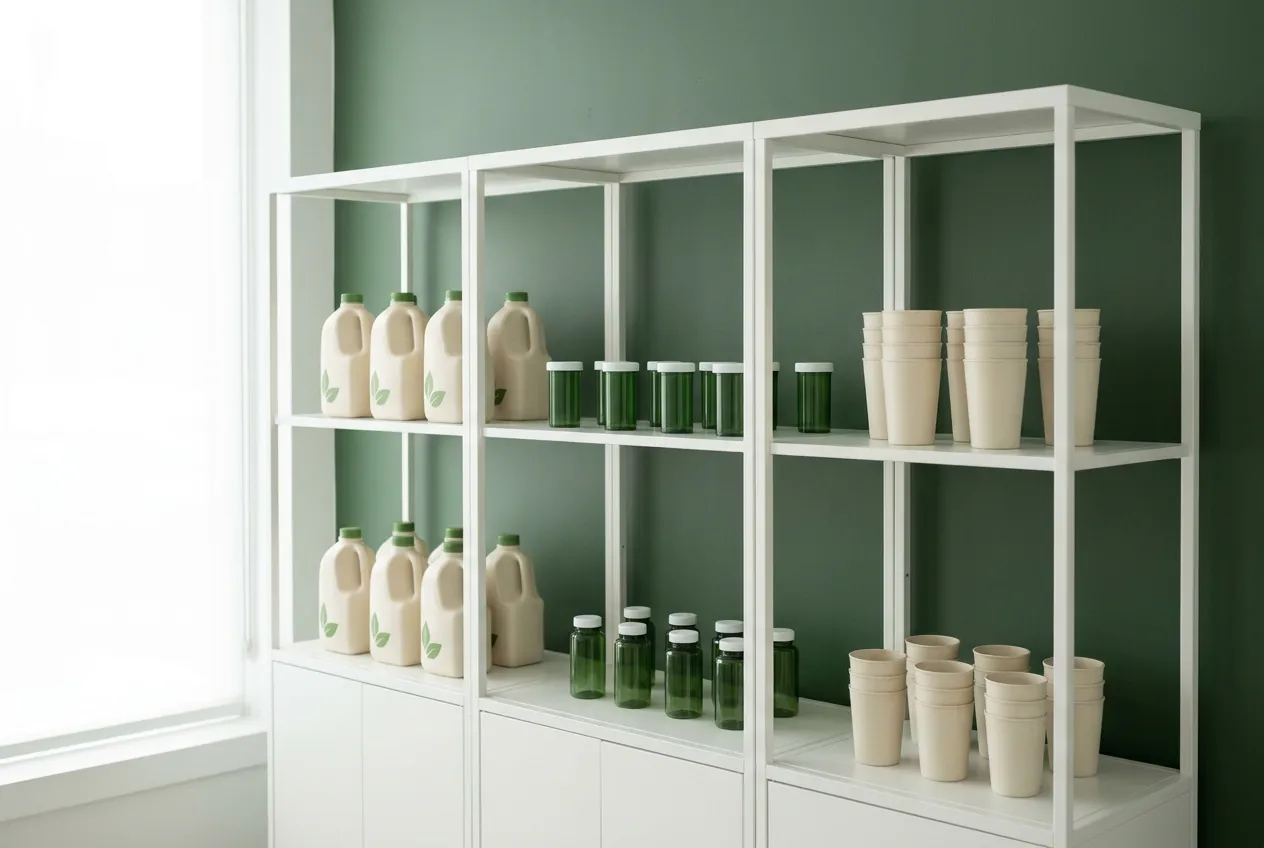
Moving off petroleum plastic is easier when it is broken into three decisions: what petroleum-free packaging actually is, which products replace familiar formats such as HDPE jugs and bottles, and where to start cutting single-use items.
What Is Petroleum-Free Packaging?
Petroleum-free packaging is made from materials that do not come from crude oil or natural gas. Conventional plastic resin is a petrochemical product. PHA starts from renewable feedstock such as canola oil fermented by bacteria, and PLA starts from fermented plant sugars.
Petroleum-free does not automatically mean compostable or biodegradable, and biodegradable does not mean it breaks down everywhere. Check three things: the feedstock (OK Biobased measures renewable carbon), the end-of-life certification for your exact product, and the disposal route your customers can actually reach.
Sustainable Alternatives to HDPE Packaging
HDPE (high-density polyethylene) is the petroleum plastic behind milk and juice jugs, pill bottles, packer bottles and many household containers. It is rigid, chemically resistant and cheap, but it persists in the environment and is only recycled where local systems accept it.
PHA offers a petroleum-free route for those same formats: milk and juice jugs, pill bottles, packer bottles and rigid and flexible containers. Because barrier performance, closure fit and shelf life differ by formulation, validate each format with samples on your filling line before moving to volume.
How Businesses Can Reduce Single-Use Plastic
Start with an audit. List every single-use plastic item you buy, the volume and where it ends up. Most operations find that a handful of items, typically straws, cups, lids, cutlery, stirrers and sauce cups, account for most of the units.
Then replace in stages. Eliminate items you do not need, switch high-volume items to certified alternatives, test samples with staff and customers, and add clear disposal signage. Finally, measure the change and share it. A phased program lets you control cost and gives you results to report.
Explore related products
Keep reading
Ready to evaluate PHA packaging for your business?
Request wholesale pricing, samples or custom packaging information.