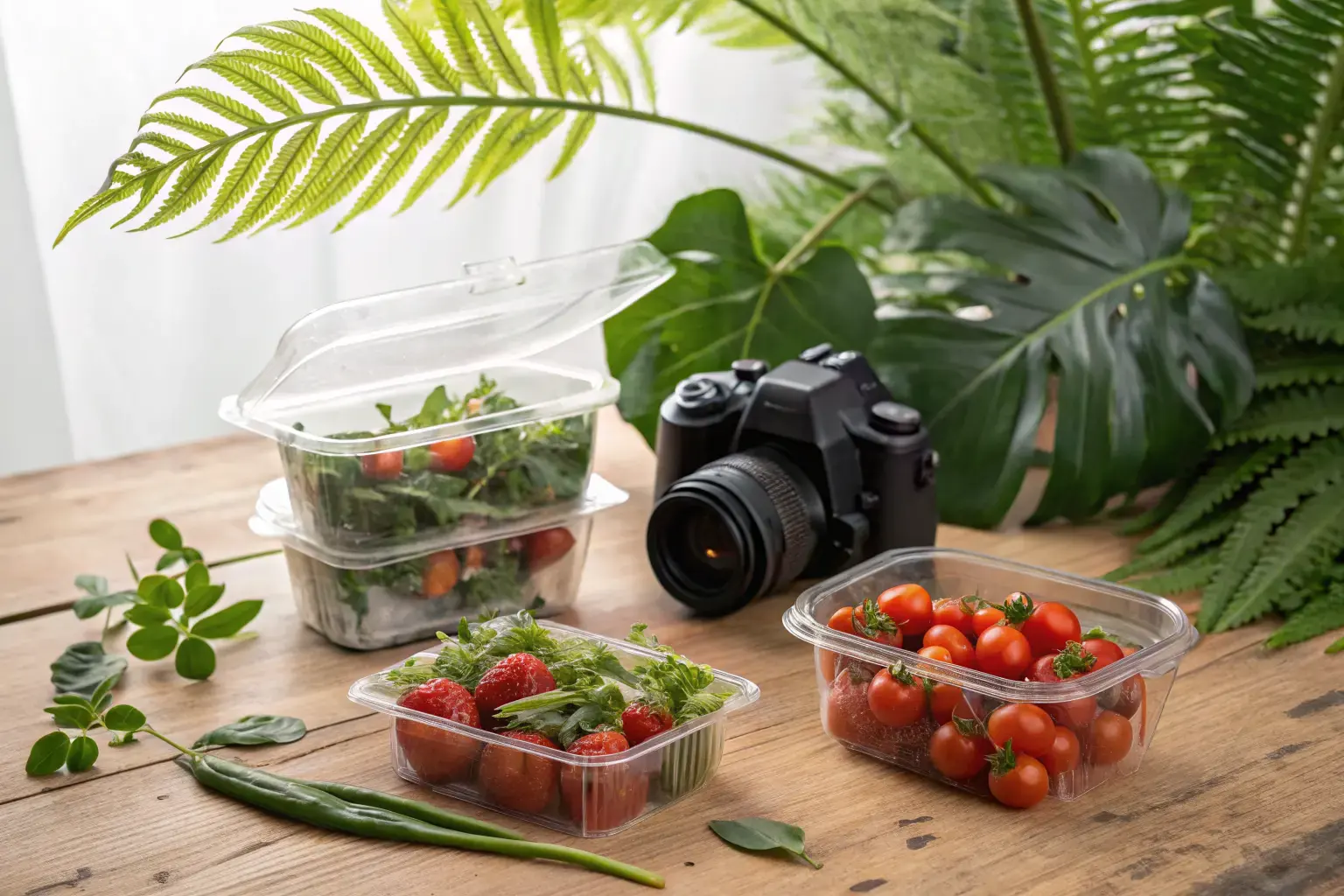
Every supermarket produce aisle, every deli counter, every takeout operation — they all share a common thread: the clamshell container. These hinged, transparent boxes carry our salads, berries, pastries, and prepared foods across millions of transactions every single day. And in the vast majority of cases, those containers are made from petroleum-derived polystyrene or PETE plastic. They are one of the most prolific sources of microplastic pollution on the planet.
The good news is that the clamshell is one of the most straightforward categories in food packaging to replace. PHA (Polyhydroxyalkanoate) and PLA (Polylactic Acid) bioplastic clamshell boxes deliver the same crystal clarity, structural rigidity, and secure snap-closure that conventional plastic clamshells offer — without any of the permanent environmental damage. Understanding these two materials, how they perform, and how they differ is the first step toward breaking the clamshell's connection to microplastic pollution.
The Clamshell Microplastics Problem: Why It's Bigger Than You Think
The global food packaging market produces billions of clamshell containers every year. The most commonly used materials — expanded polystyrene (EPS) foam and polyethylene terephthalate (PETE) plastic — are both derived entirely from fossil fuels and neither biodegrades under any natural conditions within a human timeframe.
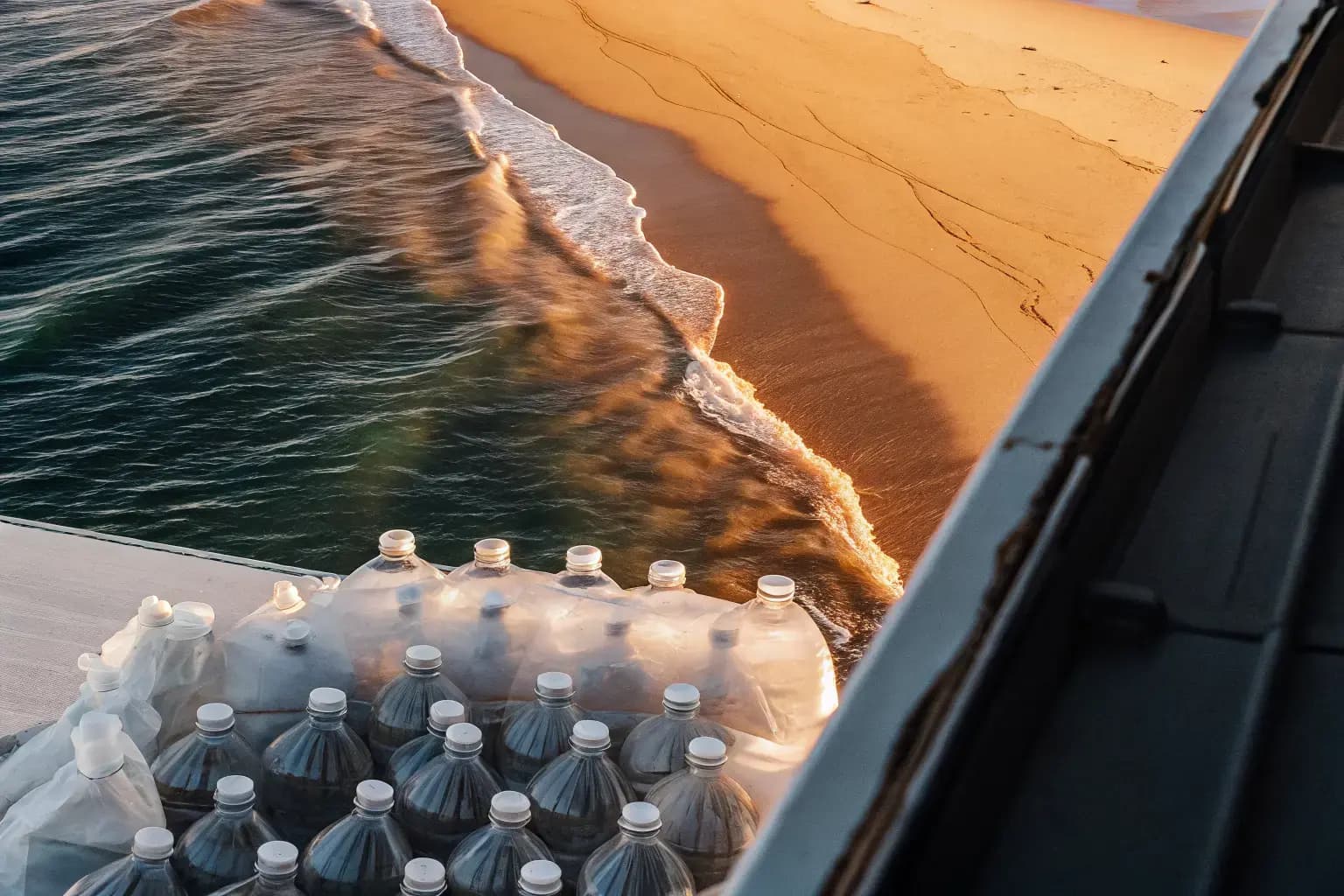
When these containers reach the end of their useful life — which is often just minutes or hours — most end up in landfills. A significant portion escapes into the environment through littering, open-air disposal in developing markets, or storm drain overflow. Once in the environment, UV radiation and mechanical stress break them down into progressively smaller fragments. These fragments — first microplastics (under 5mm), then nanoplastics (under 1μm) — infiltrate soil, freshwater, groundwater, and marine ecosystems with devastating efficiency.
Unlike larger plastic debris that can sometimes be collected before it fragments, microplastics are effectively impossible to remediate once released. They are ingested by plankton, shellfish, fish, and birds — entering food chains that ultimately reach humans. Studies have now detected microplastic particles in human blood, lung tissue, breast milk, and placentas. The clamshell sitting in your produce display for 48 hours may be polluting marine ecosystems for the next 500 years.
Billions used per year
Food service and retail generate billions of plastic clamshell containers annually. Most end up in landfill — or the environment.
Microplastics in humans
Plastic fragments from packaging have been detected in human blood, lung tissue, and breast milk. The chain runs from clamshell to consumer.
500+ years to fragment
PETE and polystyrene clamshells do not biodegrade — they fragment into microplastics that persist in soil and ocean indefinitely.

PLA Clamshell Boxes: Plant-Based Clarity Without the Petroleum
Polylactic Acid — PLA — is the most commercially mature bioplastic on the market. Made from fermented plant sugars derived from corn starch, sugarcane, or cassava, PLA is a petroleum-free material that is manufactured using processes similar enough to conventional plastics that it can be produced at scale by existing packaging facilities.
For clamshell packaging, PLA's most important property is its optical clarity. PLA clamshells are visually indistinguishable from PETE — they have the same glass-like transparency that allows consumers to see produce and prepared foods clearly, without the visual cues that "eco-packaging" has sometimes carried in the past. The secure snap-latch closure that makes clamshells effective for transport and display is fully achievable with PLA, and the material has the rigidity to protect fragile items like pastries, berries, and leafy greens without cracking under normal handling.
The critical distinction for PLA is its end-of-life pathway. Unlike petroleum plastic, PLA can biodegrade — but it requires industrial composting conditions to do so within a reasonable timeframe. At temperatures above 140°F (60°C) with adequate humidity and active microbial activity, PLA breaks down into water, carbon dioxide, and biomass within 90–180 days. In a home compost pile or a landfill, degradation is far slower. In marine environments, PLA behaves similarly to conventional plastic — it does not meaningfully biodegrade in salt water.
This makes PLA an excellent choice for closed-loop operations — food service businesses, supermarkets, and institutions with access to industrial composting infrastructure. In those contexts, a PLA clamshell genuinely exits the plastic pollution cycle entirely. Outside of that infrastructure, the end-of-life story becomes less certain.
PHA Clamshell Boxes: The Microplastics-Free Material for Every Environment
Polyhydroxyalkanoate — PHA — represents a fundamentally different approach to bioplastics. Where PLA is synthesized from plant sugars through a chemical polymerization process, PHA is produced biologically. Specific bacteria, when fed organic substrates like plant oils, agricultural waste, or food processing byproducts, naturally accumulate PHA granules inside their cells as an energy reserve. These granules are harvested, purified, and processed into a bioplastic resin.
Because PHA was created by living organisms to serve as a biodegradable energy store, the natural world already knows how to break it down. Enzymes and microorganisms found in soil, freshwater, home compost environments, and even open ocean water can metabolize PHA polymer chains directly. This gives PHA something no other food packaging material has: genuine all-environment biodegradability.
A PHA clamshell that escapes waste management — blown off a truck, littered at a beach, washed into a river — will fully biodegrade in 6–18 months under marine conditions. It does not fragment into persistent microplastics. It does not accumulate in ocean sediments. It does not enter the food chain as a pollutant. This is the specific property that makes PHA such a powerful tool in the fight against microplastic contamination.
For clamshell applications, PHA can be formulated to match or approach PLA's optical clarity and structural rigidity. PHA clamshells maintain their shape under refrigerated conditions, protect fragile produce from impact, and provide the snap-closure security that food service and retail operations require. They are also compatible with direct food contact applications — PHA does not leach endocrine-disrupting chemicals, phthalates, or BPA, unlike many conventional plastics.
Strengths
- Crystal clarity matching conventional PETE
- Lower cost per unit — mature supply chain
- Industrially compostable in 90–180 days
- Zero petroleum feedstock
- No microplastics when composted correctly
Considerations
- Requires industrial composting to biodegrade
- Does not biodegrade in marine environments
- Not suitable for hot food applications
Best for: Cold produce, deli, salads, bakery — operations with industrial composting access.
Strengths
- Biodegrades in soil, freshwater, and ocean
- No persistent microplastics in any environment
- Produced by bacteria from organic waste
- Direct food contact safe — no chemical leaching
- Works in home compost as well as industrial
Considerations
- Higher cost per unit than PLA currently
- Clarity may vary by formulation
Best for: Any operation prioritizing maximum environmental assurance, especially near coasts or waterways.
The Direct Line from Clamshell to Microplastic Contamination
It is worth being specific about the mechanism by which clamshell packaging contributes to microplastic pollution — because it is not just about containers ending up in landfills or oceans. The pathway is more insidious than that.
Conventional PETE clamshells begin fragmenting the moment they are exposed to UV radiation. In outdoor retail settings, in transport, and once discarded, photodegradation starts immediately. The invisible surface scratching from handling and stacking also creates micro-abrasion particles that can become airborne or enter waterways via storm drains. Even containers that are "properly" sent to landfills continue to fragment within the landfill, and microplastics migrate through leachate into groundwater systems.
Research published in environmental science journals has found microplastic particles from food packaging in urban waterways within miles of major distribution centers — not because the containers were littered, but because the fragmentation process is continuous and pervasive. The scale of clamshell usage means this is a systemic, structural source of contamination, not an edge case.
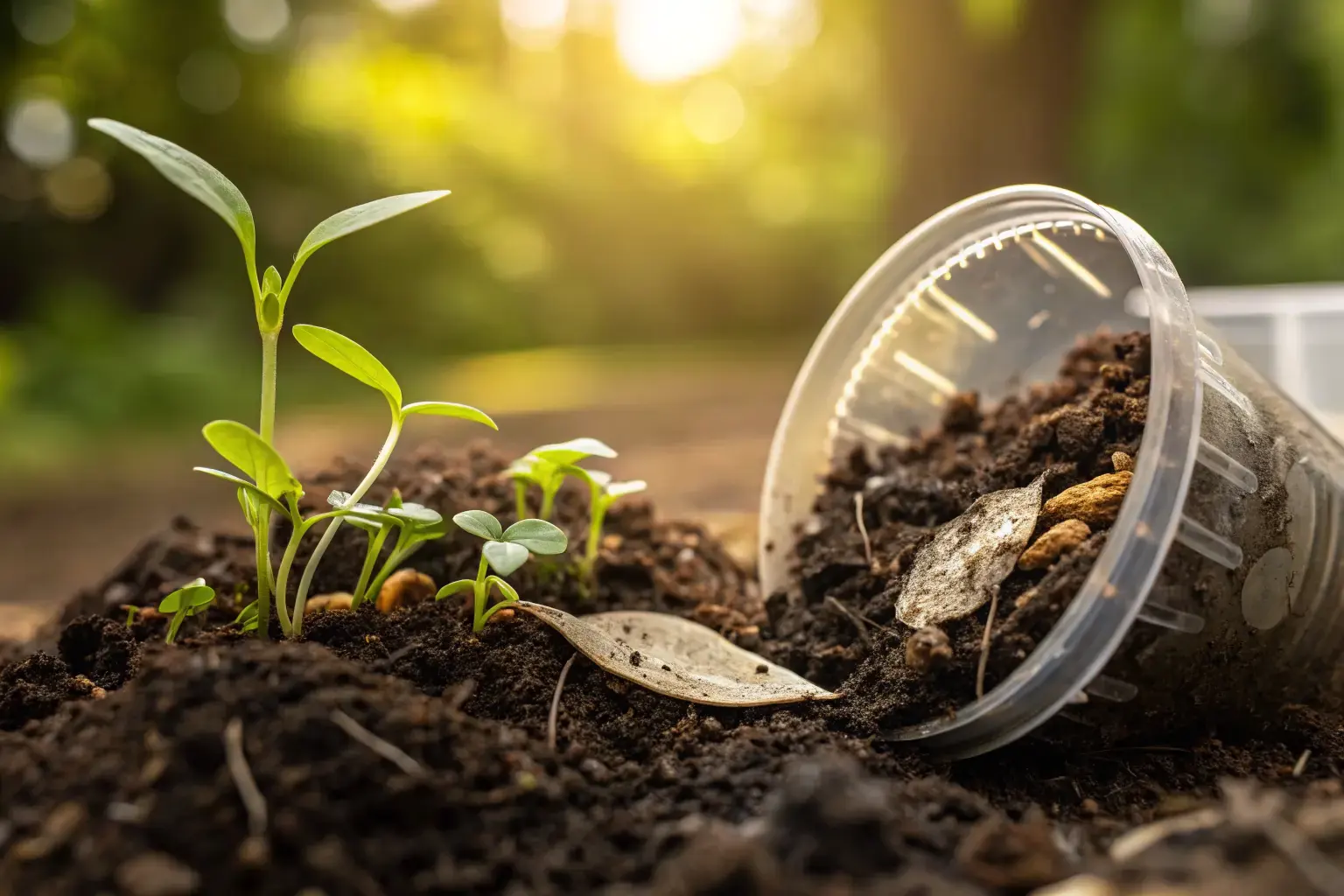
PHA and PLA clamshells break this chain at the most fundamental level: they do not produce persistent polymer fragments. When a PHA clamshell begins to degrade — whether in compost, soil, or ocean — it is metabolized by microorganisms into CO₂, water, and biomass. There is no intermediate stage of microplastic particles. The polymer chains are consumed, not fragmented.
Where PHA and PLA Clamshells Perform Best
Both bioplastic clamshell formats have proven themselves across a wide range of food service and retail applications. Understanding where each excels helps operators make the switch with confidence.
Fresh Produce & Berry Packaging
Both PHA and PLA clamshells are ideal for strawberries, blueberries, cherry tomatoes, and other fresh produce. The high clarity gives customers full visibility of the product. The rigid structure reduces bruising and breakage — research indicates compostable clamshells can reduce produce loss by up to 40% compared to soft packaging. The secure latch keeps contents contained without the need for stretch wrap or secondary packaging.
Deli & Prepared Foods
Salads, grain bowls, deli proteins, and prepared side dishes benefit from clamshell packaging that keeps components separated and presentation-ready. PLA and PHA clamshells maintain structural integrity in refrigerated display cases without clouding or cracking, and their food-contact safety profile eliminates concerns about chemical migration into refrigerated or ambient temperature foods.
Bakery & Confectionery
Muffins, cookies, pastries, and confections require packaging that protects against crushing while allowing customers to see the product before purchase. The optical clarity of bioplastic clamshells matches conventional plastic exactly, and the rigidity provides the protection baked goods need. For cold display cases in bakeries and coffee shops, both PHA and PLA perform reliably.
Takeout & Food Service
Restaurants and food service operators using clamshells for takeout meals, grab-and-go items, and catered portions are among the highest-volume users of this packaging format. Switching to PHA or PLA clamshells in these contexts has an outsized environmental impact — not only because of the volume, but because takeout packaging has among the highest rates of improper disposal, making marine-biodegradable PHA particularly valuable.
Certifications That Verify the Claims
The bioplastics market includes a spectrum of products — from genuinely compostable materials to "biodegradable" additives added to conventional plastic that provide minimal environmental benefit. Choosing clamshell packaging with third-party certifications is the only reliable way to confirm that the environmental claims are real.
Pure Form Solution's clamshell products are certified by TÜV Austria — widely recognized as the most rigorous bioplastics certification body in the world. TÜV Austria's OK Compost and OK Biodegradable certifications require independent laboratory testing under defined conditions, not simply material composition claims. Their OK Biodegradable Marine certification, relevant to PHA products, requires demonstrated biodegradation in real marine conditions.
OK Compost Industrial
Verified biodegradation in industrial composting facilities within 180 days. Confirmed for PLA clamshells meeting EN 13432 standards.
OK Compost Home
Biodegradation verified at ambient home composting temperatures. Applicable to select PHA formulations without requiring high-temperature infrastructure.
OK Biodegradable Marine
The gold standard for ocean-safe packaging. Verifies complete biodegradation in marine water conditions. Exclusively achievable by PHA-based materials.
Making the Switch: What to Expect
Transitioning from conventional plastic clamshells to PHA or PLA alternatives is operationally straightforward — more so than most packaging transitions. Because both bioplastics can be manufactured to the same dimensional specifications as conventional PETE clamshells, the switch typically requires no changes to filling equipment, labeling systems, or display infrastructure.
The main operational consideration is storage environment. PLA clamshells should be stored away from moisture and temperatures above 140°F — conditions that would not normally apply to a properly climate-controlled storage area. PHA clamshells have a similarly stable shelf life under normal warehouse conditions.
For businesses making the switch, communicating the change to customers is also an opportunity. Consumers are increasingly aware of and concerned about microplastic pollution, and the certification marks on PHA and PLA packaging are meaningful signals. The "OK Biodegradable Marine" mark on a clamshell container communicates immediately and credibly that the business has made a deliberate choice — and that the packaging it chooses does not contribute to the microplastic crisis.
Clamshells Are a Choice — Make the Right One
The clamshell is not going away. It is one of the most effective food packaging formats ever developed — protective, clear, lightweight, stackable, and sealable without tape or adhesives. The question is not whether to use clamshells, but which material they are made from.
Conventional plastic clamshells carry a hidden cost: decades to centuries of environmental persistence, progressive microplastic fragmentation, and accumulation in the bodies of marine organisms and ultimately humans. That cost is not reflected in the price of the container. It is externalized onto the environment and onto future generations.
PHA and PLA clamshells close that gap. They deliver identical packaging performance with a fundamentally different environmental trajectory — one that ends in soil and biomass rather than microplastic particles in the Pacific. For food businesses of any size, the transition is available today, and the impact is immediate. Every PHA clamshell that replaces a PETE one is a unit of microplastic pollution that never enters the ecosystem.
That math — container by container, operation by operation — is how the microplastics crisis gets reversed.
Ready to Switch?
Explore Pure Form Solution's PLA Clamshell Boxes
TÜV Austria certified. 100% plant-based. Crystal-clear. Secure snap closure. Drop-in replacement for conventional plastic — with zero microplastic legacy.